Every puff of a cigarette silently chips away at your health, damaging organs you don’t even think about every day. People often wonder, “How long does it take smoking to damage your body?”, or “Can smoking damage skin and face permanently?”.
In this article, we’ll uncover exactly how smoking damages the body, what organs it affects, how it harms your skin, and importantly—how much of this damage can be reversed once you quit.
For deeper health insights, you can also check trusted resources like the World Health Organization (WHO) and CDC Tobacco Free.
How Smoking Affects the Whole Body
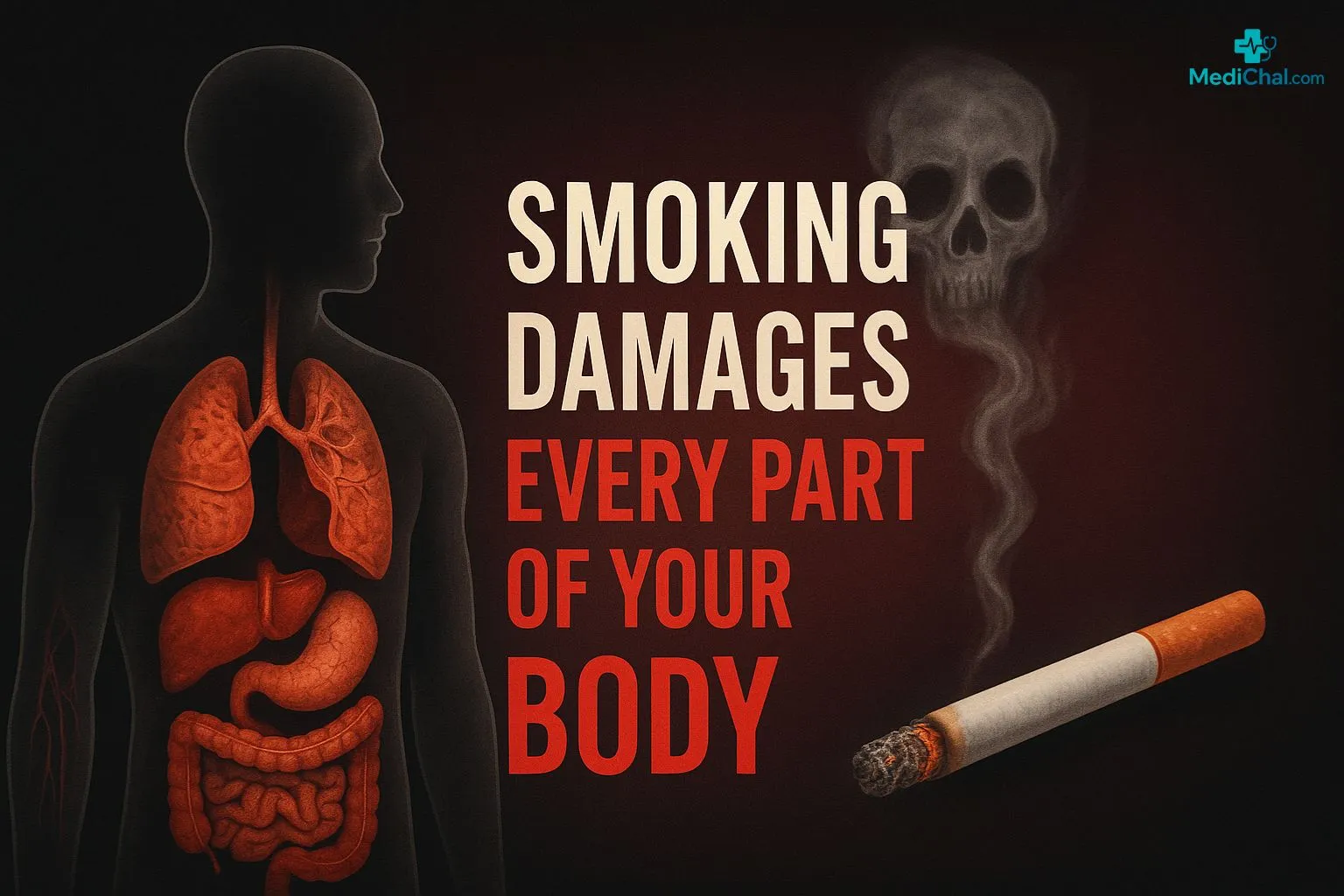
When you inhale cigarette smoke, more than 7,000 toxic chemicals enter your bloodstream and travel to every organ.
- Respiratory system (lungs) → smoking damages lungs leading to COPD, lung cancer, and reduced breathing strength.
- Cardiovascular system (heart & blood vessels) → nicotine and carbon monoxide narrow arteries, leading to higher chances of strokes and heart attacks. (American Heart Association)
- Digestive system (liver, kidneys) → harmful toxins make your liver and kidneys work harder, increasing risk of organ diseases.
- Reproductive health → smoking damages sperm, lowers fertility, and increases pregnancy complications.
- Immune & DNA damage → your natural defense weakens, and DNA damage raises the chance of cancer mutations.
What Parts of the Body Does Smoking Damage?
Smoking harms almost every organ. Here are the most affected areas:
- Lungs → lung cancer, emphysema, bronchitis.
- Heart & blood vessels → damaged arteries, clots, hardened blood vessels.
- Skin & face → wrinkles, dullness, sagging.
- Mouth, gums, teeth → gum disease, tooth loss, stained teeth. (NHS – Smoking and Oral Health)
- Liver & Kidneys → higher risk of cirrhosis and kidney disease.
- Reproductive health → low sperm count and risky pregnancies.
Want to know how this compares with alcohol effects? Check our detailed guide on drinking vs smoking health damage.
How Smoking Damages the Skin and Face
Nicotine shrinks blood vessels under your skin, starving it of oxygen and nutrients.
- Wrinkles form quicker.
- Skin tone becomes dull.
- Healing slows, scars last longer.
- Puffy eyes and under-eye bags appear.
Can skin damage from smoking reverse itself?
Yes, if you quit early your skin improves significantly within months. But deep wrinkles often stay.
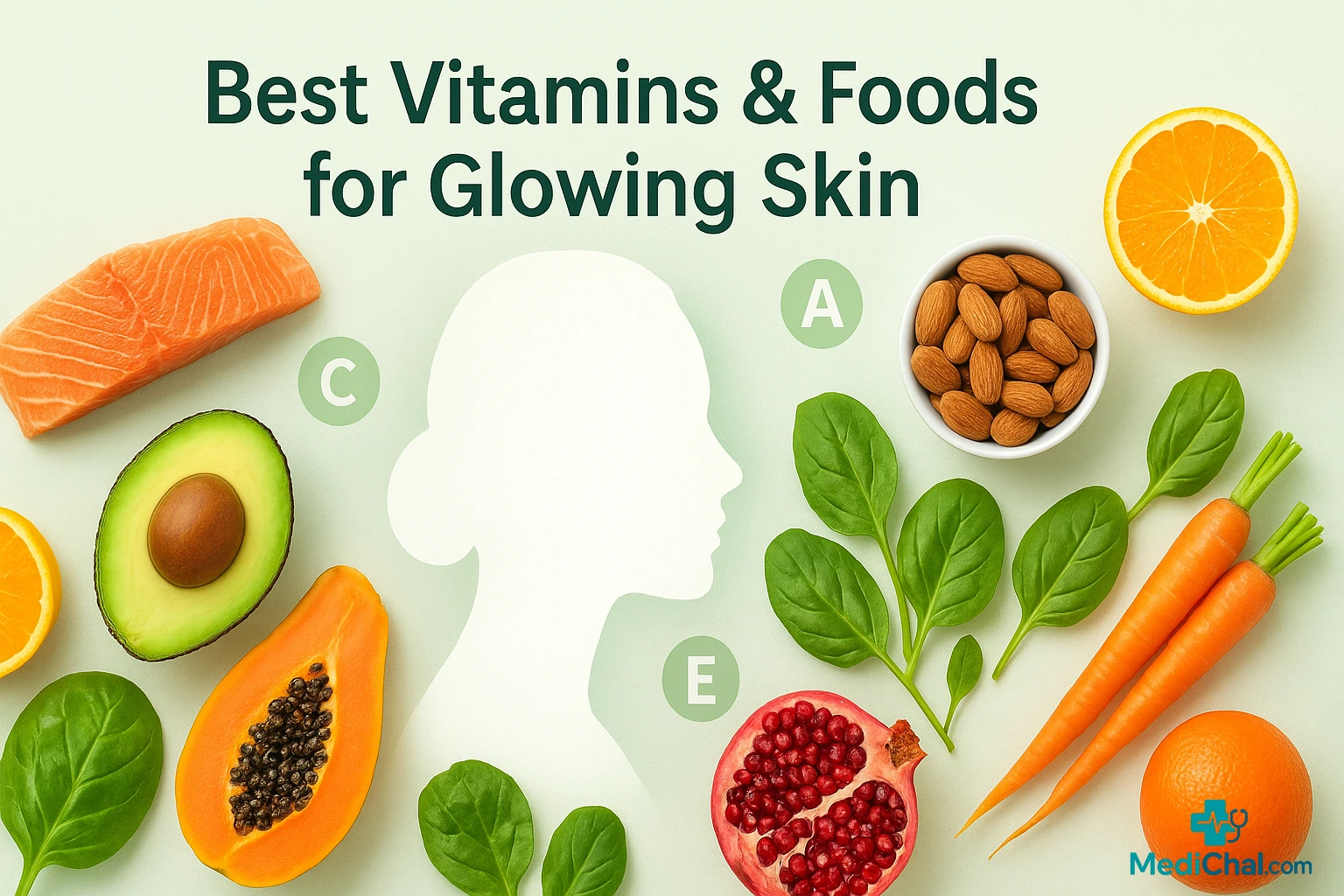
For natural recovery, see our blog on best vitamins and foods for glowing skin.
Smoking vs. Weed – Which Is Worse?
- Tobacco → proven cause of cancer, heart disease, organ failure.
- Weed → lung irritation, memory issues, brain fog (if overused).
- Mixing both → doubles risks: cancer + lung damage.
For scientific updates, look at Mayo Clinic – Marijuana Health Effects.
How Long Does It Take for Smoking to Damage Your Body?
- Immediately → one cigarette raises heart rate and blood pressure.
- After weeks → lung function and circulation drop.
- Long term → risks of cancer, stroke, organ failure multiply.
Is one cigarette a day harmless?
No. Research confirms there is no safe level of smoking (Cancer Research UK).
Is Smoking Damage Reversible?
Your body begins to repair itself the moment you quit:
- 20 minutes → heart rate stabilises.
- 1–12 months → lung capacity improves.
- 5 years → risk of stroke drops noticeably.
- 10 years+ → risk of cancer and heart disease can be cut in half.
Skin may regain glow, but heavy damage like wrinkles won’t fully reverse.
The Dangerous Inner Damage – Arteries & DNA
The unseen harm is the scariest:
- Arteries: inner lining gets damaged, causing deadly plaque buildup → heart attacks and strokes.
- DNA: cigarette toxins break DNA strands, causing permanent mutations that can trigger cancer.
Conclusion – Why Quitting Is the Only Way Forward
Smoking harms your body in ways you may not even notice until it’s too late. From lungs, heart, and skin to DNA—every cigarette chips away at your health.
- How injurious is smoking to health? → Extremely.
- What parts does it damage? → Almost all vital organs.
- Is quitting worth it? → Absolutely. Your body starts healing the moment you stop.
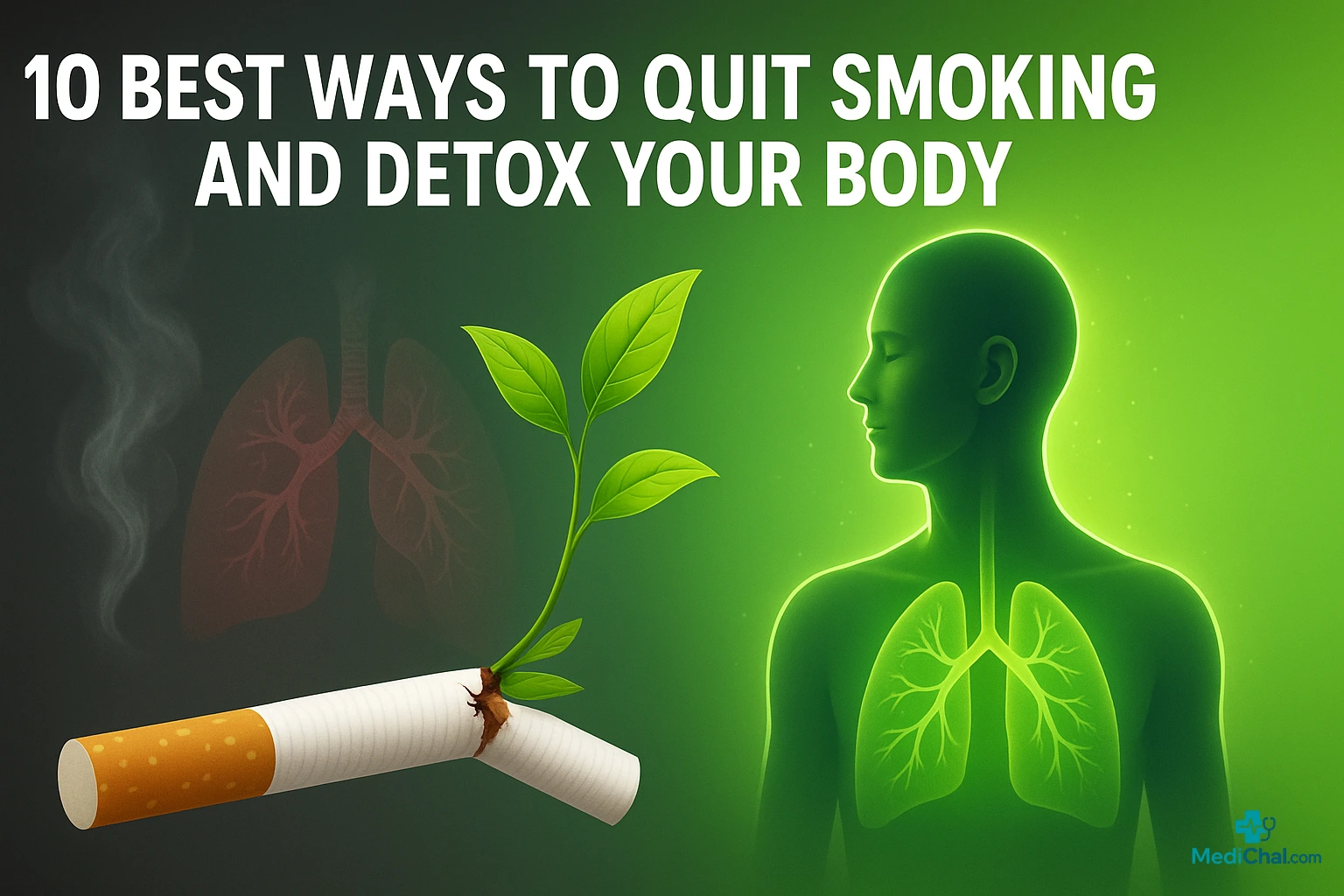
If you’re ready, check out our proven guide: 10 Best Ways to Quit Smoking and Detox Your Body.
Remember: Every cigarette less is damage avoided. Every day without smoke is healing gained.
FAQs on Smoking Damage
1. How long does it take smoking to damage your body?
The damage begins immediately with your first cigarette. Within minutes, your blood pressure and heart rate rise. Over weeks and months, circulation and lung function get worse. Long-term use leads to cancer, COPD, and organ failure.
2. What organs does smoking damage the most?
Smoking damages the lungs, heart, blood vessels, skin, mouth, gums, kidneys, liver, and even reproductive organs. It affects nearly every part of your body.
3. Can smoking damage your skin and face?
Yes. Nicotine narrows blood vessels, reducing oxygen supply to your skin. This causes wrinkles, dullness, sagging, and early aging.
4. Is skin damage from smoking reversible?
Some skin recovery is possible after quitting, especially in glow, hydration, and elasticity. However, deep wrinkles and long-term changes may be permanent.
5. What is worse for your body—smoking tobacco or weed?
Both damage the lungs, but tobacco is far more dangerous as it causes cancer, heart disease, and DNA damage. Weed may affect memory and lung health but doesn’t contain the same level of carcinogens as tobacco. Smoking both together increases risks.
6. How much damage does one cigarette a day do?
Even one cigarette per day is harmful. Research shows it still raises the risks of stroke, heart attack, and cancer. There is no safe level of smoking.
7. Can the damage from smoking be reversed after quitting?
Yes. Within 20 minutes, your body starts healing. Over months to years, risks of heart disease and certain cancers decline, and lung function improves. Complete reversal depends on how long and how much you smoked.
8. How does smoking damage DNA?
Chemicals in tobacco smoke cause DNA mutations. These errors can trigger uncontrolled cell growth, leading to various cancers.
9. Why is smoking called ‘injurious to health’?
Because it affects nearly every organ in the body, weakens immunity, increases cancer risk, shortens life expectancy, and reduces quality of life.