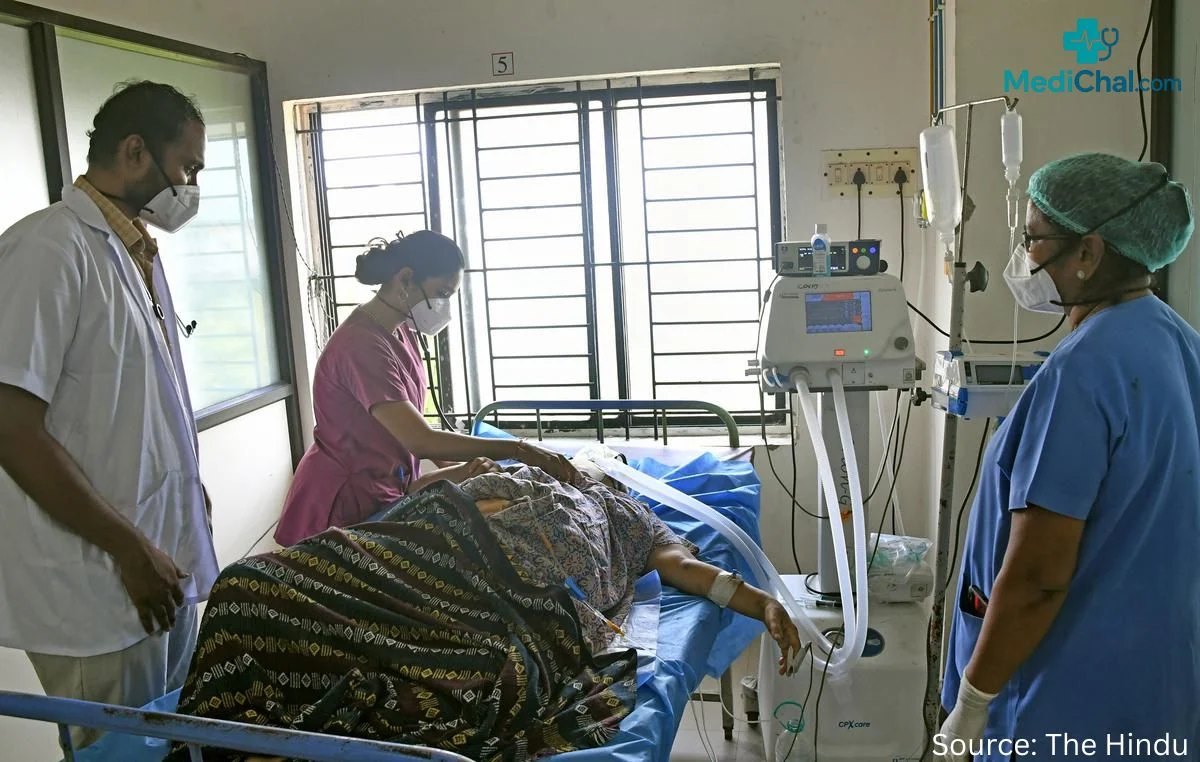
Kerala, once hailed as India’s healthcare success story, is now struggling with a grim paradox. Beyond its literacy rates, high life expectancy, and model primary healthcare system, the state has been hit repeatedly by deadly outbreaks. The latest is amoebic meningoencephalitis, a rare but almost always fatal brain infection caused by the so-called “brain eating amoeba” Naegleria fowleri.
As of mid-September 2025, Kerala has confirmed 67 cases and 18 deaths, raising urgent questions: Why does India’s most health-literate state so frequently find itself at the epicentre of emerging and re-emerging diseases?
What Is Amoebic Meningoencephalitis (PAM)?
Amoebic meningoencephalitis is caused by the free-living amoeba Naegleria fowleri, which thrives in warm, stagnant, or poorly treated water. The amoeba enters the body through the nose, usually while swimming, bathing, or using contaminated water for nasal cleansing.
Symptoms include:
- Severe headache
- Fever and nausea
- Vomiting
- Stiffness of the neck
- Seizures and rapid neurological decline
The disease is extremely rare but carries a very high fatality rate worldwide.
Kerala’s Serial Outbreaks: A Timeline
Over the last decade, Kerala has reported:
- Nipah virus (five times in eight years)
- Zika virus
- West Nile fever
- Scrub typhus and Shigella
- Anthrax, Japanese encephalitis
- Recurring dengue and leptospirosis
- COVID-19 first case in India (Thrissur, 2020)
- Monkeypox (2022)
This recurring pattern has led many experts to question whether Kerala’s celebrated health model is also its greatest blind spot.
Why Kerala? The Outbreak Paradox
- Ecological Factors
Kerala’s rivers, wetlands, and backwaters form fertile grounds for pathogens. Urban sprawl and deforestation increase zoonotic spillovers (diseases passed from animals to humans), such as Nipah virus linked to fruit bats. - Climate Change Hotspot
Erratic rainfall, rising temperatures, and prolonged mosquito seasons mean vector-borne and water-borne diseases spread faster and mutate quicker. - High Human Mobility
With a massive non-resident Keralite (NRK) population, international travel brings in global pathogens. The 2021 Zika outbreak, for instance, was traced back to returning travelers. - Public Complacency
Despite high health literacy, unsafe practices—like bathing in stagnant water, poor waste disposal, and limited sanitation vigilance—continue to fuel outbreaks.
Strong System or Overconfidence?
Some argue Kerala’s robust health surveillance simply makes it better at detecting diseases earlier than other states. Others say this early detection, without equally fast response systems, creates the impression that Kerala is a “petri dish” for outbreaks.
Experts warn: “Detection without rapid response is like watching a fire burn because you noticed the smoke early.”
Kerala Government’s Response to Amoebic Meningoencephalitis
Health Minister Veena George has urged urgent preventive measures, including:
- Avoid swimming or bathing in stagnant/unclean water bodies
- Ensure swimming pools are properly chlorinated
- Use only clean, treated water for nasal cleansing
- Keep wells and storage tanks disinfected and covered
- Raise awareness of early symptoms and seek immediate care
Additionally, Kerala plans a collaborative case-control study with the National Institute of Epidemiology (ICMR) to identify risk factors. Research tie-ups with IISc Bengaluru, PGIMER Chandigarh, and State Pollution Control Board will explore genomic sequencing, water surveillance, and sanitation strategies.
Lessons for the Rest of India
Kerala is not alone. The outbreaks it faces today may strike Mumbai, Chennai, or Kolkata tomorrow. Its experience highlights three key lessons for India’s public health system:
- Invest in anticipatory surveillance
- Strengthen ecological and climate-linked health strategies
- Empower communities to take shared responsibility
As one expert put it: “We must stop measuring healthcare by how many we save after falling ill, and start by how many we prevent from getting sick in the first place.”
FAQs on Kerala’s Brain-Eating Amoeba Outbreak
Q1. What causes amoebic meningoencephalitis?
It is caused by Naegleria fowleri, a free-living amoeba found in warm, stagnant, or contaminated freshwater.
Q2. Is the infection contagious?
No. It does not spread from person to person. It occurs when contaminated water enters the nose.
Q3. How deadly is the infection?
The mortality rate is over 95% worldwide, making it one of the deadliest infections known.
Q4. How can people protect themselves?
Avoid bathing or swimming in stagnant water, keep storage tanks clean, ensure chlorination of pools, and use only treated water for nasal cleansing or rituals.
Q5. Why is Kerala reporting so many outbreaks?
A mix of ecological vulnerability, climate shifts, international travel, and early detection systems make Kerala a hotspot for identifying emerging infections.
Conclusion
The Kerala health outbreaks story is a cautionary tale for all of India. While Kerala’s strong health system ensures early detection, the real challenge lies in anticipation, prevention, and rapid response. Until then, the so-called “model state” may continue to be remembered for all the wrong reasons.